I have been involved in the accounting profession since 1985 and have had a fondness for the topic of fraud since then. Over the years, I have seen all kinds of hypes come and go. Often these were accompanied by doomsday scenarios. Consider, for instance, the millennium bug: the story of a disaster that didn't come. Computer systems would crash at the turn of the year 1999/2000 due to careless programming. But ATMs would also stop working, medical equipment would fail, and closer to home: our phones and televisions would stop working. Fortunately - apart from relatively minor incidents - all was not too bad and the year 2000 could be ushered in with a glass of champagne without a care in the world.

Or take the initially unprecedented rise and growth of internet companies at the end of the last century that led to the ‘internet bubble’ that largely burst afterwards. While the internet has led to successful new companies such as Amazon and BOL, how many companies have gone under? Companies that went public for sky-high sums without ever making a penny of profit. In the Netherlands, the rise and fall of Worldonline - a company that brought Nina Brink great fame - symbolises the internet soapball.

With the example of the internet bubble, I do not deny that the internet has shaken up market relations and business models have changed. Some online shops are causing vacancy in shopping streets. Shop staff who gave personal advice have been replaced by ICT people who can build and maintain a website. Algorithms that track customers and encourage them to buy products through websites have become more important than advertising flyers in the letterbox. But in essence, it is still about selling products and services. That was so in the old economy and is still so in the new economy. For instance, electric cars remain essentially means of transport just as solar panels are just a means in the energy supply. Bitcoins have the function of a means of payment and are therefore not essentially different from a dollar, yen and euro.
Having learned the hard way, I have developed a tendency to view hypes somewhat sceptically. And of course, I know that in the preceding paragraphs I have been charging here and there and that there are comments and nuances to be made: it is not just about old wine in new bottles.

The point I want to make is that when it comes to changes, innovations and hypes, you should always keep using common sense, (re)assessing risks, adapting processes and systems, training and rejuvenating staff, adapting laws and regulations and managing related issues. But also that you need to look not only at risks and threats, but also at opportunities.

An example of hype where I am starting to miss common sense concerns the so-called ESG and CSRD reports, in short, all that is nowadays subsumed under the heading of sustainability and non-financial information. I see this subject being ‘hijacked’ by accountants, lawyers and other consultants. They turn it into a regulatory and compliance circus that, as far as I am concerned, does not do justice to what it is really about and should be about: making and keeping people, organisations, society and earth fit(r) for the future. That is the core of what it should be about, but what many have long ceased to be about. Compliance has become ‘key’ instead of whether an adequate contribution is being made to a resilient future. Moreover, I observe several parties pushing the boundaries of the law and engaging in ‘brown- and greenwashing’, a subject that is not popular in the circus of advisers but is highly relevant to stakeholders.

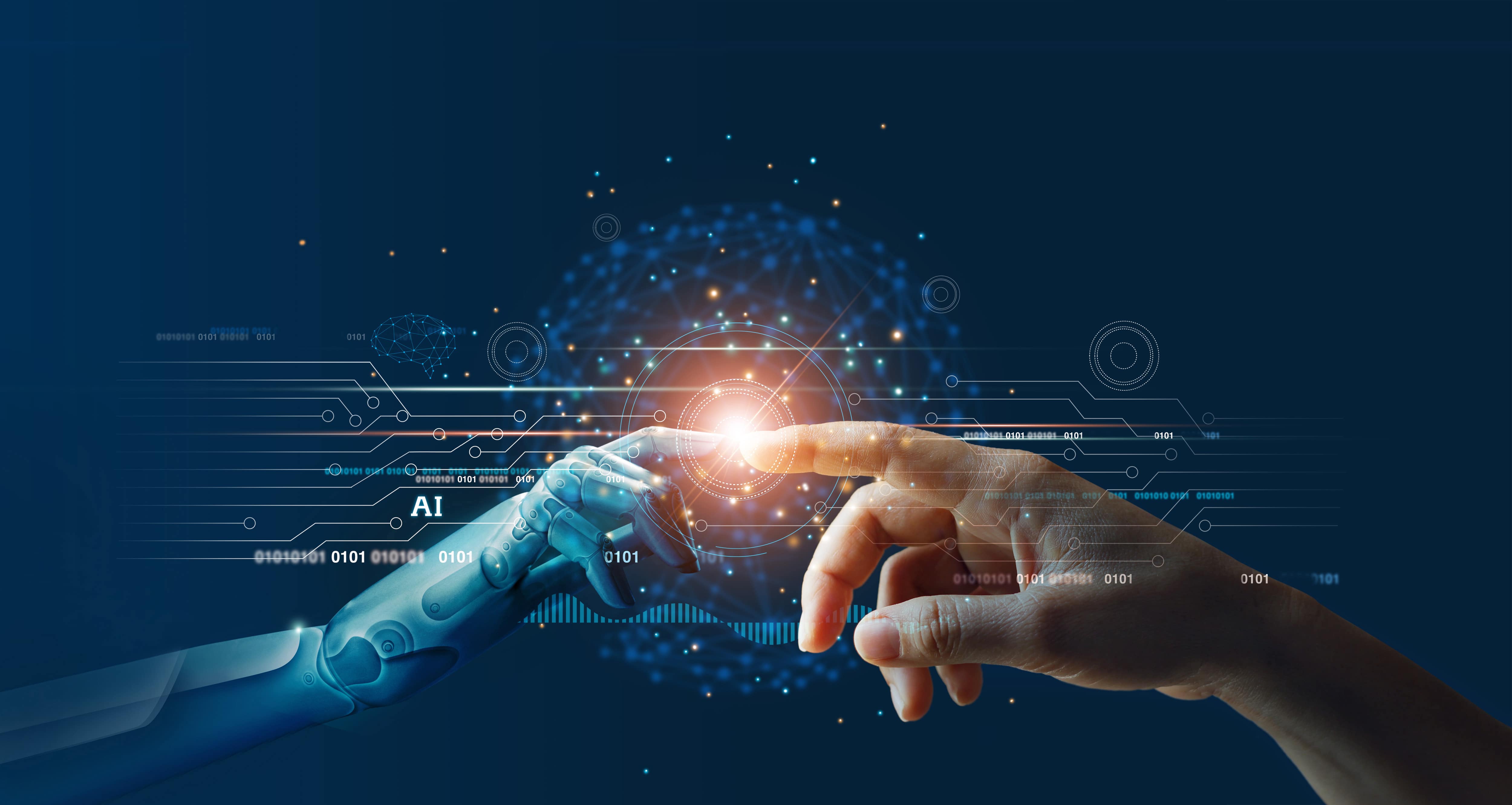
AI has been experiencing significant growth in recent years and it is being embraced by many. Chat-GPT and an increasingly wide use of algorithms has certainly contributed to this. Some paint a threat picture that encompasses several aspects. For example, that it is becoming increasingly easy to spread ‘fake news’ and, in conjunction with this: that it is becoming increasingly difficult to distinguish between real and fake news. Or that uncontrollable algorithms are getting a grip on the doings of organisations, which would lead to unwanted and threatening situations. But also that AI will take over human work on a large scale, thus making labour power much less necessary.
ai-frauderisico
But is that really the case? Isn't traditional media now winning out over the nonsense spread via Twitter/X and other social media? Aren't more and more regulations emerging regarding the use of algorithms, and aren't we moving towards tighter oversight of their development and use? Aren't the efficiency gains and labour losses from the use of AI offset by the creation of new all kinds of new functions?

And besides the threats, let us also look at the opportunities of technology and AI, for instance in the context of fraud prevention and control. For instance, it is becoming increasingly easy to fathom and analyse extensive databases (‘big data’) more quickly and effectively. To spot anomalous patterns or predict behaviour (of suppliers and customers, for instance). To detect and follow up fraud signals early.

Incidentally, none of this is new. For instance, banks have long been using pattern recognition and risk classification tools as part of anti-money laundering efforts to spot unusual transaction patterns and monitor high-risk customers. For example, credit card and telephone companies have been using systems that spot anomalous patterns in near real-time for many years.

What is new is that more and more organisations are only now discovering the use of such tools, slowly becoming familiar with them and starting to use them. In other words, ‘awareness’ is going up. As far as I am concerned, this should focus on both opportunities and threats. Opportunities should be exploited, threats should be guarded against. This is not hype, but of all times.