The Blog of Marcel

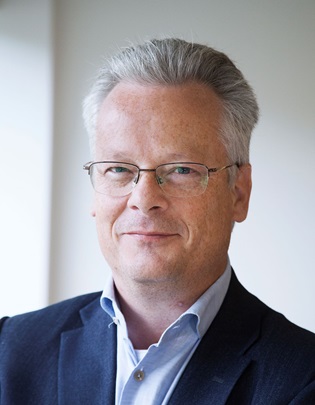
Marcel is a professor of (forensic) accountancy at Nyenrode Business University and Leiden University. He became fascinated by fraud and fraud control at an early age. Business fraud is his speciality. He writes a quarterly blog about this here.

Allow me to introduce myself to the reader: Marcel Pheijffer, professor of (forensic) accountancy at Nyenrode Business University and Leiden University. At an early age, I was gripped by the 'fraud virus'. As a 17-year-old, I started training as a deputy accountant at the National Audit Office, part of the Tax and Customs Administration. As a young boy, I read about fraud investigations conducted by the Fiscal Intelligence and Investigation Service (FIOD) under telling codenames such as 'Action Foam Collar' and 'Action Gold Tooth'. The former involved black (beer) sales within the hospitality industry, the latter involved black sales of waste gold in the dental industry.

At that time (1984), I also read the book: It's going good: scams and mismanagement in Dutch businesses". Written by Pieter Lakeman, who focused on malpractices by directors and the dubious role of accountants who did not intervene. Who was also recently in the news for his call for former ING CEO Ralph Hamers to be prosecuted for failing to comply with anti-money laundering legislation and compliance obligations in this regard.

So I became fascinated with fraud and fraud prevention from an early age. Fraud is a subject that everyone can and sooner or later does encounter. As a private individual, for example by buying fake products that are barely distinguishable from branded goods or by scams in the form of Marketplace fraud. As a government institution, for example by the creation of black money circuits through which too little tax is paid or in the form of subsidy fraud. As an entrepreneur, for example through so-called 'CEO fraud', where employees of the finance department are induced to transfer hefty sums of money, usually to a foreign bank account, via a fake email from a fake CEO under time pressure. Fraud by buyers receiving 'kick backs' from suppliers is just as classic, while hacking and crippling computer systems is more of a recent phenomenon.

In short, fraud risk is a risk everyone has to consider. You don't want to have to deal with it and be affected by it. Fraud causes damage and distress. Victims often feel embarrassed and ashamed. Could they have or even should they have prevented the fraud? Why were they not in control of the fraud risks? Were they too trusting or perhaps a bit clumsy and stupid? And what should you do if you are affected by fraud? Who will investigate? Where to turn for legal assistance? Should affected employees be fired? Can damages be recovered through a lawyer? For instance, against the perpetrators involved and perhaps against an accountant if they audited with their eyes closed while you rewarded them royally for their work? What measures should be taken to strengthen your company and prevent future damage? Should you insure your company in this respect and what considerations play a role in this?

Allianz Trade has asked me, from a partnership on fraud.nl with Hoffmann and Lexence, to write columns about fraud. To create more awareness in you as a reader about the risk of fraud. To emphasise that it is a subject that should not be on your agenda as a topic only after you, or at least the company, is affected by it. To emphasise that you have the responsibility for setting up a system of administrative organisation and internal control that can reduce (but usually: cannot eliminate) fraud risk. To make you realise that carrying out (or having carried out) a fraud risk analysis is useful. To make you aware that fraud insurance can help limit damage if you are unexpectedly hit by fraud. To stress that you should think about this before you are hit by fraud and not only after. To make you realise that you may think you are 'in control' but you are not. To give insight into how auditors pay attention to fraud and that you cannot have limitless trust in them.

By now I am no longer a 'young boy', but an oldie (56 years old). Seasoned in the world of fraud prevention. Concerned with issues such as corruption, money laundering, integrity and governance. I learnt the trade at the Inland Revenue and was lucky enough to work at the FIOD, where I had the opportunity to run small and large cases. In the field of organisational and white-collar crime (e.g. VAT fraud, investment fraud and the reporting fraud at Ahold) and organised crime (e.g. into the Surinamese army chief Desi Bouterse, convicted for drug trafficking, and the 'Hakkelaar gang'). I was also an investigator for the Lower House on several occasions (including the Parliamentary Inquiry into the Construction Fraud, and the investigation into the HBO fraud.

After 18 years in the Tax Office, including 12 years in the FIOD, I made the switch to the Universities for which I still work. Wrote several books and many articles on fraud (investigations). Was called in as an expert by judges, trustees and lawyers. Reported among other things on the money laundering transactions in the investigation into Willem Holleeder and the property traders Willem Endstra and Dirk Jan Paarlberg, and recently on the role of accountants at Imtech. As a columnist, I wrote hundreds of columns on accountant.nl and have been writing in the Financieele Dagblad for more than 10 years.

From my background and experience, I will write periodically on the subject that has fascinated me for 40 years. A subject as old as the road to Rome. A subject that will always remain topical and should be on the agenda (read: your agenda). A subject that has new manifestations all the time. Greenwashing' - pretending to be better and 'greener' in sustainability reports than you actually are as a company - is the fraud of the future. Thus, the dangers of the crypto industry are increasingly coming to the surface.

In short: plenty to write about. In the form of anecdotes, dealing with current affairs, delving into a technical subject such as fraud risk analysis or the fraud triangle, going into the psyche of the fraudster, interpreting investigations into the nature and extent of fraud and highlighting the (sometimes dubious) role of the accountant.

Then sign up now for our newsletter Allianz Trade Magazine!
We will then send you the latest developments on the economy, sectors, bankruptcies and tips for optimal debtor management every 8 weeks.