
Germany: Solid growth outlook
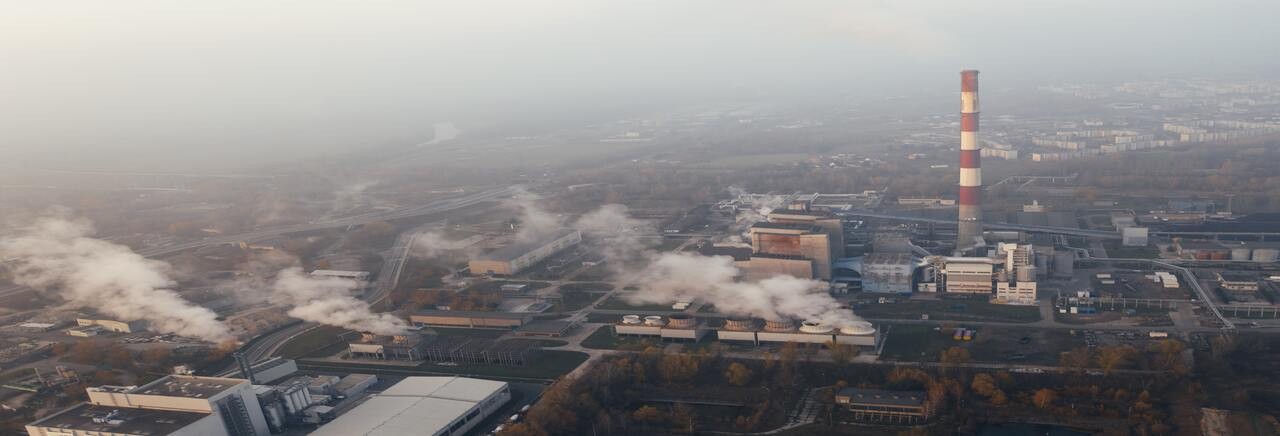
The prospects for the German industrial sector remain favorable. In September, price-adjusted new orders in manufacturing increased a seasonally and working-day adjusted +1% on the previous month (August: +4.1%) while industrial production was down by -1.6%. A major driver behind the latter was the automotive sector, where production declined by -6.5% on the previous month (following a sharp jump of +11.1% in August). The strong fluctuation in monthly data was due to the fact that plant holidays in the automotive sector happened to be in July rather than in August this year, so the figures overstated the situation in August somewhat. In the third quarter as a whole industrial production increased by +1.1% on the previous quarter in seasonally-adjusted terms (Q1: +0.9%, Q2: +1.7%). Based on this we still feel comfortable with our real GDP call of +0.5% q/q for Q3. In light of overall very strong economic data (Ifo business climate, PMIs, new orders, labor market etc.) we will probably adjust our Q4 2017 and 2018 GDP growth forecasts based on the upcoming Q3 data release on 14 November. It looks like there is some upward potential.
Indonesia: Slowly picking up
Real GDP growth edged up to +5.1% y/y in Q3 (from +5% in Q2). While the increase in private consumption remained stable (+4.9% y/y), investment picked up speed (+7.1% y/y, after +5.3% in Q2). Exports surged by +17.3% y/y in Q3 but the impact on GDP growth was partially offset by an almost equally strong rise in imports (+15.1%). Looking ahead, strengthening investment growth indicates a gradual acceleration of economic expansion in the short run. Moreover, monetary policy is broadly accommoda¬tive: the Central Bank cut its policy rate by 0.25pp to 4.25% in September. Yet, domestic credit growth, at +7.9% y/y in September, has remained below the Central Bank’s target of +10% y/y. Fiscal policy is cautiously accommodative with rising government expenditures targeting infrastructure development. Externally, the economy is benefiting from a rise in capital inflows (+12% y/y for FDI in Indonesia in Q3 2017). Against this backdrop, full-year real GDP growth is forecast to pick up gradually to +5.1% in 2017 (from +5% in 2016) and +5.2% in 2018.
Bahrain: Increased country risk
Last week, the smallest GCC member state reportedly asked Saudi Arabia and the UAE for financial support in order to replenish its FX reserves and avert a currency devaluation. Bahrain’s fiscal and external vulnerabilities have steadily increased in the wake of continued low oil prices since 2014. Even though the annual fiscal deficit will decline from an average -18% of GDP in 2015-2016, it is expected to remain very large at around -12% in 2017 and -11% in 2018. Public debt has rapidly risen from 44% of GDP in 2014 to currently around 90%. The current account deficit widened to -4.7% of GDP in 2016 and is forecast to remain above -4% in 2017-2018. Financing the fiscal and external deficits has reduced the Central Bank's FX reserves to about USD1.4bn in August 2017 (import cover 0.7 months); and Bahrain’s SWF is comparatively small, comprising about USD10bn at end-2016. The GCC neighbors are likely to provide the requested aid but on the condition of serious fiscal consolida¬tion, which in turn will curb growth prospects in the short term. All in all, country risk in Bahrain has risen.
Emerging Markets: World, hold on
The manufacturing sector is still exhibiting growth in Emerging Markets (EM). Our proprietary EM aggregate Manufacturing PMI decreased to 51.3 points in October from 51.9 in September, but the bulk of this evolution was explained by two particular events. First, the Mexican PMI went down from 52.8 in September to 49.2 in October, the first below-50 print since September 2013. This was driven by the impact of the earthquake, already visible in Q3 growth figures (-0.2% q/q; see also WERO 2 November 2017), as it disrupted the supply chain as a result of raw material shortages. Second, the Chinese PMI index normalized to 51.6 points in October after a relatively high value in September (52.4). Elsewhere in other EM, the manufacturing activity stayed vibrant in October, particularly in open economies in Asia Pacific (e.g. 52.6 in Singapore, a new high since December 2009) and Eastern Europe (e.g. 58.5 in the Czech Republic, the highest figure since April 2011). It suggests that the overall growth momentum is still robust in the world economy, and that trade continues to accompany this growth cycle.
Countries In Focus
U.S.: A solid picture
Latvia, Lithuania & Serbia: Diverging growth trends
Morocco: Growth is plateauing
China: A gradual moderation